Process knowledge.
Hydrogen infusion, measurement, retention and filling knowledge translated into an agreed operating scope.
Explore the technology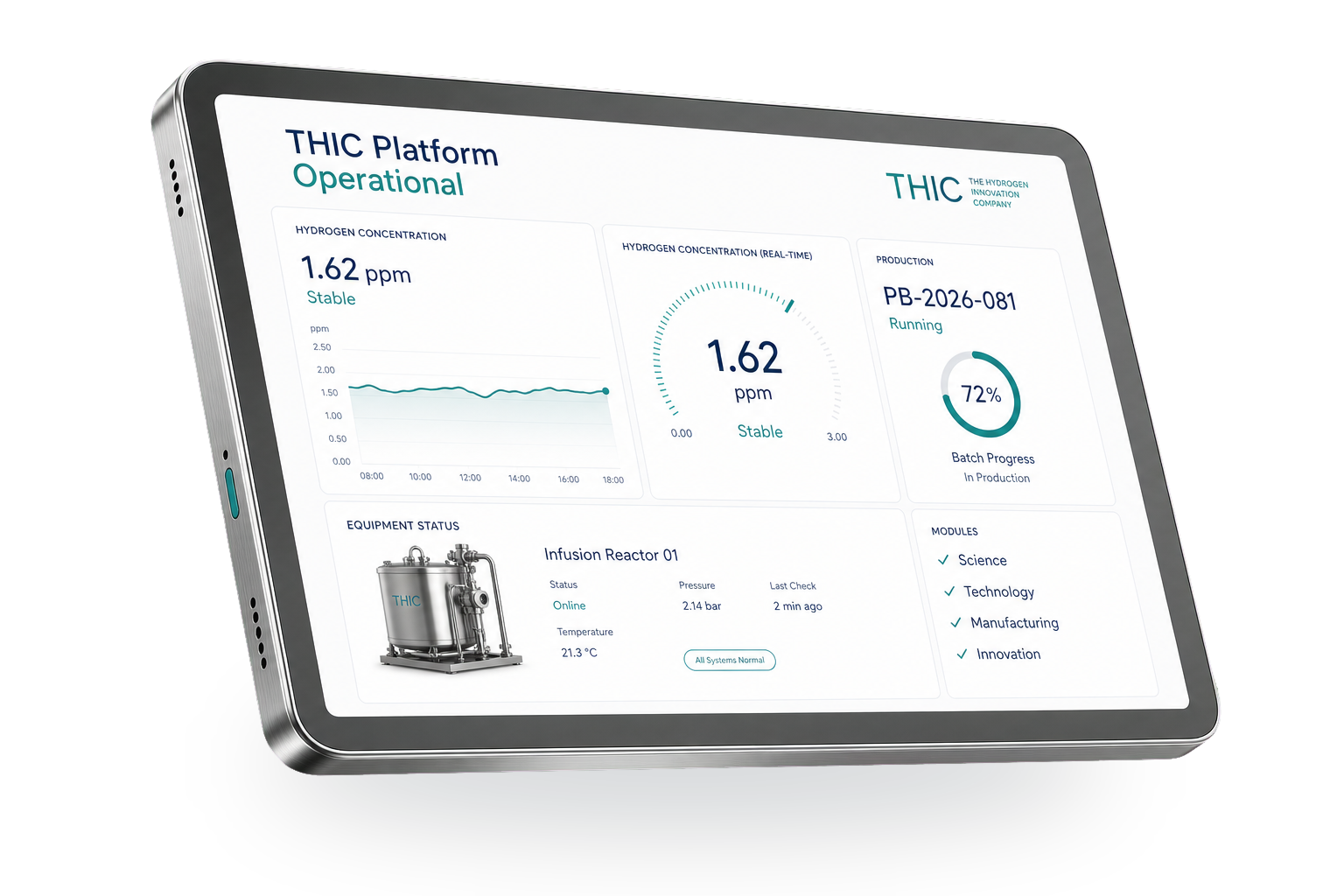
THIC licensing is designed for partners whose strongest route is technology transfer, local production or market-specific operation. It connects proprietary process knowledge, system integration, production deployment, quality control and technical support into a defined pathway.
Each opportunity is scoped before rights, responsibilities or territories are agreed. This keeps the discussion practical: what will be produced, where it will be produced, how performance will be validated and whether white label manufacturing, implementation or licensing is the right next step.
The exact package depends on the agreement, application and territory. The foundation remains technical capability rather than generic brand distribution.
Hydrogen infusion, measurement, retention and filling knowledge translated into an agreed operating scope.
Explore the technologyTechnical assessment, equipment integration, validation and production-readiness support.
See manufacturingDocumentation, quality workflows, partner support and operational review through the THIC platform model.
Read platform supportA license may be structured around an application, format, market, territory or production model. THIC does not present licensing as unlimited access to every hydrogen beverage opportunity.
Scope is clarified through the partner’s market role, production environment, validation requirements, quality expectations and support needs. Formal rights, exclusivity and obligations are handled through agreement.
The commercial agreement is only one part of the process. Transferable value comes from technical assessment, system engineering, validation and support that allows a partner to produce under controlled conditions.
Confirm application, facility context and technical feasibility.
Set product, process, quality and support requirements.
Adapt the hydrogen system to the agreed production route.
Measure performance under documented operating conditions.
Move into controlled production with trained operators.
Review data, quality records and optimisation needs over time.
The THIC Platform is the integrated combination of scientific expertise, engineering capability, manufacturing experience and technology licensing. It keeps partner projects tied to evidence, production records and long-term support.
Share the application, market and production route you want to explore. THIC will review whether the opportunity should begin with licensing, white label manufacturing, technical implementation or another commercial pathway.
Discuss Technology Transfer